

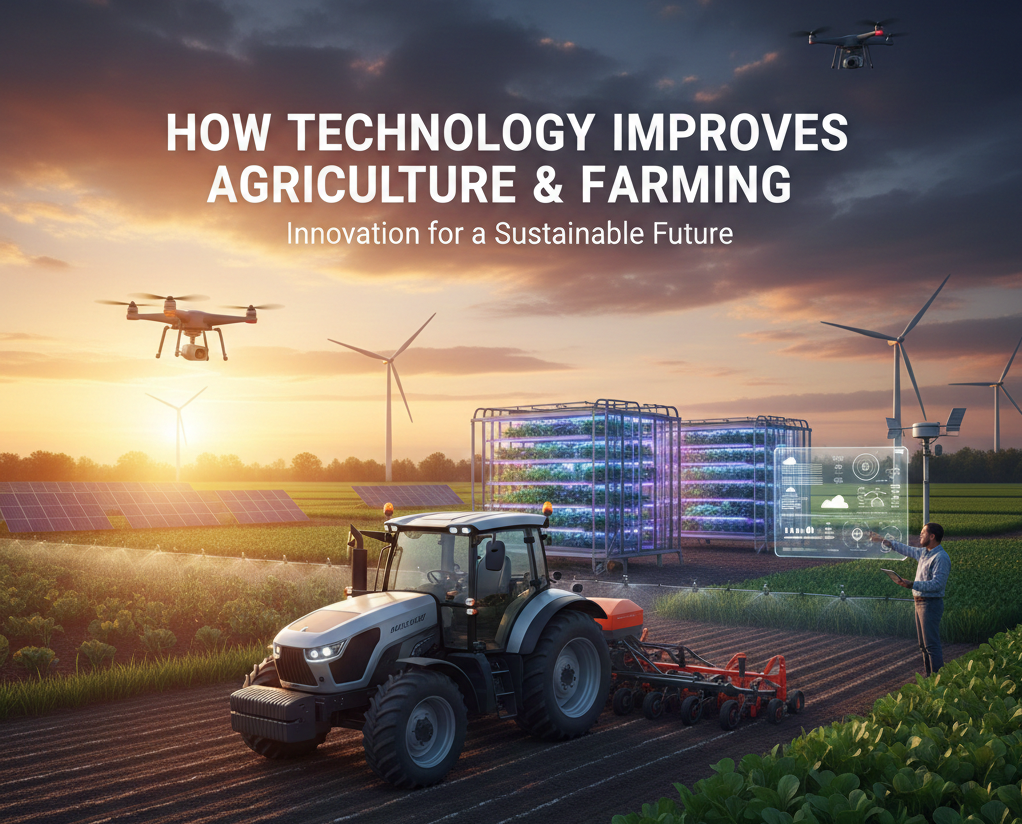
Agriculture has been a source of sustenance for numerous countries, including India. Previously, farming heavily relied on human labor, hand tools, and seasonal knowledge transmitted from one generation to the next. Peasants toiled hard but had their share of woes — erratic weather, low yields, and high costs. Today, technology is transforming the way farming is done, making it easier, smarter, and more efficient.
Agricultural technology is not just big machines or complex systems. It covers small digital tools, smart farming techniques, better seeds, and irrigation systems. Modern equipment helps farmers grow higher-quality crops while saving time and money.
The Shift from Traditional Farming to Modern Farming
Historically, farmers relied on rain and conventional agriculture. Crop scheduling decisions were based on experience, not data. Changing weather conditions could have hit farmers heavily.
Information Age technology indeed sustains farmers’ decision-making capacity with real information. Weather forecasting apps, soil testing devices, and agricultural advisory services now inform farmers before they plant their crops. This change means farming can be more planned than risky.
Smart Machinery and Modern Equipment
The use of modern machines is one of the greatest developments in agriculture. Previously, much labor was needed on the farm for plowing, seed sowing, and harvesting. There were long working hours. Today, those processes have been modernized thanks to newer machinery that can get the job done faster and better.
Machines assist farmers in getting the work done on time, particularly during short planting or harvesting seasons. Even small farmers are now using modern equipment because it enhances productivity and relieves physical toil. Nowadays, the tractor is an integral part of farm operations because it works for various agricultural purposes such as sowing, harvesting, and land preparation.
Mechanization also helps reduce reliance on costly and hard-to-manage rural labor.
Precision Farming and Data-Based Decisions
Precision farming is one of the most important technologies in agriculture. It focuses on how to use data to manage crops and soil more efficiently. Farmers are able to determine precisely how much water, fertilizer, or pesticide each part of their field needs.
By utilizing GPS systems, sensors, and satellite imagery, farmers can track the development of their crops and the conditions of the soil. Instead of applying fertilizers over the entire farm, which may not be equally needed everywhere, they can apply resources only where required. It saves money and conserves the health of the soil.
Precision farming maximizes yield and minimizes waste, thereby making agriculture more sustainable.
Role of Artificial Intelligence in Farming
It looks like Artificial Intelligence (AI) is finally creeping into agriculture as well. AI analyzes weather patterns, crop diseases, and soil conditions to give farmers helpful recommendations. Farmers are warned of pest attacks or adverse weather conditions in advance.
The introduction of AI-based mobile applications can detect plant diseases within minutes by scanning crop images. This allows farmers to take emergency measures and limit big losses. Such tools can be particularly helpful to farmers who may not have access to agricultural advisers.
Technology drives expert advice straight to the farmer.
Smart Irrigation Systems
Agriculture has long faced water management difficulties. Both overwatering and underwatering can kill crops. Modern irrigation methods help farmers use water efficiently.
Drip and sprinkler systems apply water directly to the roots. Some sophisticated systems monitor soil moisture and control irrigation automatically using sensors. This minimizes water waste and keeps crops healthier.
In water-scarce areas, smart irrigation can be an efficient promoter of sustainability in agriculture.
Drones and Remote Monitoring
Drones are taking off in agriculture. They assist farmers in scanning vast farms without having to go into the field.
Aerial images from drones help assess crop health, areas of pest infestation, and irrigation issues. Farmers can spot problems early and make corrections. Drones are also used to spray fertilizers and pesticides uniformly across fields.
This technology saves time, reduces the amount of chemicals applied, and improves safety for farmers.
Digital Platforms and Agricultural Apps
Access to information for farmers has changed through cellular technology. Many agricultural apps supply daily updates regarding weather forecasts, market prices, crop management, and government schemes.
Farmers are now able to sell food online and make sales directly to buyers. Online markets remove middlemen and help farmers get better prices for their crops.
Technology has boosted transparency in agricultural markets and educated farmers.
Improved Seeds and Biotechnology
Science has enhanced a variety of high-yielding and disease-resistant crops. Through biotechnology, crops are made to grow better even in challenging conditions such as drought or pest infestation.
Better seeds increase production without expanding farmland. Farmers gain better quality produce and higher income. Biotechnology also helps farmers preserve the environment and practice sustainable farming methods by reducing chemical usage.
Automation and Robotics in Agriculture
Robots and automated machines are beginning to find their way into farming. Robots can complete tasks like planting, harvesting, and weeding with incredible accuracy.
Automation is still an emerging phenomenon in many regions, but labor costs are being reduced through automation. One day, farms may look highly automated with self-operating machines and minimal human presence.
This shift demonstrates how technology is transforming agriculture.
Benefits of Technology in Agriculture
Farmers and the agricultural industry benefit in many ways from technology:
- Increased crop productivity
- Reduced labor cost
- Better resource management
- Improved soil and water conservation
- Faster farming operations
- Accurate decision-making
- Higher farmer income opportunities
- Reduced environmental impact
These advantages make farming more profitable and sustainable.
Challenges in Adopting Agricultural Technology
There are several limitations despite many advantages. Advanced technology may be expensive for small farmers. Rural adoption can be slow because of lower technical literacy and weaker internet access.
Training schemes, state backing, and access to affordable technology will be vital to ensure all farmers gain from modernization.
Technology should be easy to use, accessible, and farmer-friendly.
The Future of Technology in Agriculture
The coming decades have a bright future for agriculture. The adoption of smart farming, electric farm machinery, AI-based crop monitoring, and climate-smart agriculture is expected to expand further. Farming technology will enable farmers to produce more food with fewer resources.
With the growing world population, agriculture must become more efficient to satisfy food demand. Technology will help achieve food security while safeguarding natural resources.
Farming today is as much about information and analysis as it is about physical toil. Knowledge, innovation, and digital solutions come together to realize the potential of agriculture.
Conclusion
From traditional cultivation to intelligent agricultural systems, technology is transforming farming. Today, farmers have drones and apps to plan, monitor, and manage their crops like never before. From smart irrigation to digital marketplaces, innovation is improving every aspect of farm life.
Farmers can adopt modern solutions step by step to optimize productivity, minimize risk, and raise their standard of living. Technology is not replacing farmers; rather, it is helping them produce food more effectively and sustainably for future generations.
Together, agriculture and technology are defining the next era of farming — one that leads to increased efficiency, sustainability, and growth.