
Gone are the days when loyalty programs were a simple arithmetic exercise. You spend money, earn points, and redeem for a discount. That relationship used to be transactional, and the data it generated largely wouldn’t go past accounting.
But times have changed.
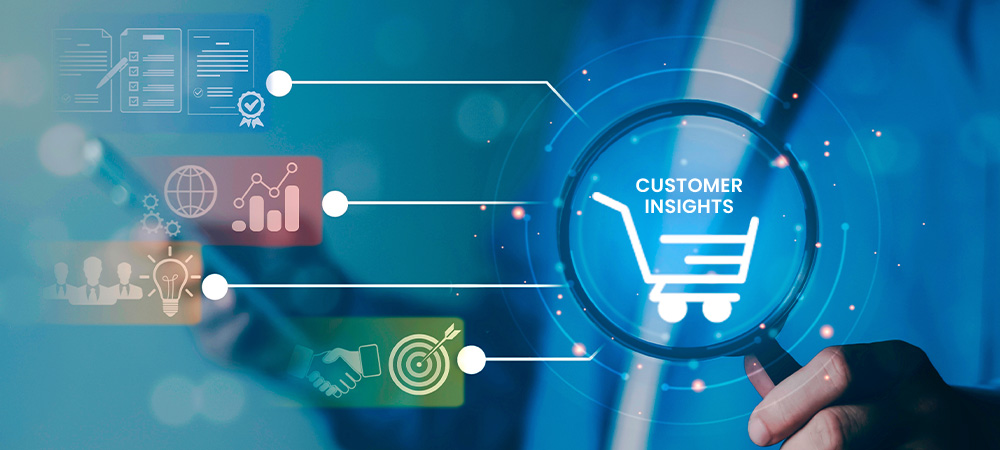
Retailers have come to terms with the fact that the real value of a loyalty program lies in the data. The retailers seeing the most value today are the ones using customer insights to make every interaction feel personal, timely, and almost psychic. And the loyalty program trends driving this shift is rewriting the rules of retail.
So, what does all this loyalty data actually tell retailers? We’ll look at the trends shaping how that data is collected, analyzed, and put to work—and what those insights mean for the way retailers connect with customers.
What Is Loyalty Program Data?
Loyalty program data refers to the information collected when customers interact with a brand loyalty program. It is first-party data, and the information the retailer gathers directly from its own customers through their participation in the program.
This data is generated across multiple touchpoints. When a customer enrolls, they provide profile information. When a customer makes a purchase the transactional data is recorded. When they use a reward apply a coupon or interact with an email those actions are also tracked. This creates a feedback loop for the loyalty program capturing what customers do before during and, after each transaction.
What makes this data particularly valuable is its specificity. It is not inferred or modeled. It is actual behavior tied to an identifiable customer. That precision is the foundation of everything that follows.
Types of Data Retailers Collect
Understanding what retailers capture is essential to understanding what they can do with it. The data falls into several distinct categories.
1. Transactional Data
This is the most straightforward category. It includes:
- Products purchased down to the stock keeping unit (SKU) level
- Purchase value—both total basket size and individual item prices
- Date and time of purchase—revealing shopping habits and patterns
- Store or location—identifying where the customer shops
- Purchase frequency—how often they return
Transactional data answers the basic question: what did they buy, and when?
2. Customer Profile Data
This is the information customers provide about themselves:
- Customer preferences—product categories, brand affinities
- Loyalty membership details—tier status, enrollment date
- Communication preferences—how and when they want to be contacted
Profile data is the foundation for personalization. Without it, retailers are guessing.
3. Behavioral Data
This category captures how customers interact with the program itself:
- Coupon usage—which offers they use
- Reward redemption—what they choose to redeem points for
- Promotion engagement—which campaigns they respond to
Behavioral data reveals what motivates the customer. It is the difference between knowing they bought something and understanding why they bought it.
4. Engagement Data
This encompasses digital interactions:
- Email interactions—opens, clicks, forwards
- App activity—logins, browsing, feature usage
- Loyalty account activity—point balance checks, reward browsing
- Digital coupon engagement—saves, shares, redemptions
Engagement data measures the health of the relationship. A customer who checks their points often is more engaged than a customer who only opens the app to redeem points.
Why First-Party Loyalty Data Matters
The importance of first-party data is very high. As rules about privacy get stricter and tracking, companies become not as good as it used to be stores need their own information to learn about their customers.
Loyalty programs are in a place to do this. They are different from a purchase. A loyalty program builds a long-term connection. The retailer and the customer both have something to gain. The customer wants rewards and thanks. The retailer wants to know the customer and serve them well.
Loyalty Program Data Trends Retailers Need to Watch
The data is there. The question is what retailers are doing with it. These eight trends represent the most significant shifts in how customer loyalty data is being used.
1. Personalization Based on Individual Purchase Behavior
Generic promotions are dying. Sending the same offer to every customer is not just inefficient—it is actively damaging. Customers see irrelevant offers and tune out.
Retailers are moving toward personalization based on actual purchase history. Instead of a blanket 10% discount, they send offers specific to what the customer actually buys. The person who buys high-quality coffee each week gets a gift related to coffee. The person who buys clothes for kids gets a promotion for going to school.
This approach accomplishes two things. It improves the relevance of offers, which increases redemption rates. Personalization cuts down on discounting because offers are targeted instead of broadcast. Personalization is more than a better customer experience. It is a margin-protection strategy.
2. Predictive Analytics for Customer Behavior
Descriptive analytics tells you what happened and predictive analytics tells you what is likely to happen.
Retailers are not just looking at past loyalty data. They are using it to predict what customers might do next. This shift helps them plan better and stay ahead of customer needs. They are getting ready for what comes next. They are asking which customers are likely to churn? Which is likely to increase their spending? What reward will drive a specific behavior?
The distinction is important. Descriptive analytics is backward-looking. Predictive analytics is forward-looking. The latter enables proactive interevent reaching out to a customer before they leave or incentivize a purchase before they would have made it anyway.
3. AI-Powered Customer Insights
Artificial intelligence (AI) is moving loyalty analytics from manual reporting to automated intelligence. The old model was to run a report, identify a trend, and decide on an action. The new model is one where the system identifies the trend, recommends an action, and, in some cases, executes it automatically.
AI is particularly valuable for pattern recognition. It can identify behavioral shifts that would not be obvious to a human analyst. A slight decline in purchase frequency, combined with a decrease in email engagement, might signal a customer at risk—but only if the system is watching for that combination. AI watches for it continuously.
4. Real-Time Loyalty Data
The days of analyzing customer data, days or weeks after a transaction are ending. Customers expect immediate recognition, and they expect immediate action.
Real-time loyalty data makes it possible to send real-time offers. A customer enters a store checks, in using the app and gets an offer before they get to the shelves. A customer leaves a cart online and gets a meaningful discount while they are still looking at products.
Integration between the point-of-sale system and the loyalty platform is required. When a purchase is made, the point-of-sale system captures the data, and the loyalty platform processes it immediately. The loyalty program stops being a retrospective reporting tool and becomes an active engagement system.
5. Customer Segmentation
Basic segmentation, new versus returning, and high versus low spend are no longer sufficient. Retailers are moving to behavioral segmentation.
Behavioral segmentation groups customers by what they do. There is the “treat yourself” shopper who makes infrequent but high-value purchases. There is the “stock-up” shopper who buys the same items on a regular cadence. There is the “deal hunter” who only purchases when there is an offer.
6. Customer Lifetime Value Is Becoming a Core Loyalty Metric
Customer lifetime value means the money a store can get from a person while they keep buying from the store. It is changing the way businesses look at success. Of just looking at single sales, they now focus more on average order value.
CLV matters because it changes the way we think about loyalty. A customer with a CLV is valuable to keep even if each sale they make isn’t always profitable. A customer, with a CLV might not be worth giving a discount to. Loyalty programs are changing from giving rewards based on spending to giving rewards based on long-term value.
7. Connecting Loyalty Data with POS Data
Loyalty data is valuable on its own. But it becomes significantly more valuable when connected to transaction data.
Integrating loyalty and POS systems brings customer and transaction data together in one place. By integrating loyalty and POS systems retailers no longer manage data sets, for loyalty activity and purchases. This gives retailers a view of each customer. The unified view allows for personalization more accurate analytics and more efficient operations.
8. Omnichannel Loyalty Data
Customers do not think about channels. They think in terms of the brand. Yet many loyalty programs still treat online and offline as separate systems.
Omnichannel loyalty data records every step of a customer’s journey no matter which channel is used. Omnichannel loyalty data knows that a customer looked at items bought something in a store used a coupon sent by email and checked their points balance in the app. Omnichannel loyalty data sees the picture.
How Retailers Are Turning Loyalty Data into Actionable Insights
Collecting data for a loyalty program is one thing. Making use of that data is where the real edge comes in.
Here’s how top retailers are using loyalty program analytics and customer loyalty data to create results, for their business:
Identify High-Value Customers
Not every customer is the same. Data from loyalty programs help retailers divide customers into groups based on how they are worth, over time how often they buy things and how much they usually spend on each order.
Using loyalty program analytics retailers can create RFM models that rate each customer and automatically identify high-value groups for treatment of unique deals and active communication. This is one of the important trends in loyalty programs changing from treating all members the same way, to treating them differently based on their real value.
Discover Product Preferences
Every transaction in a loyalty program reveals what customers actually buy. By studying loyalty program customer data retailers can uncover:
- Frequently bought-together items
- Category affinities
- Brand preferences within categories
- Seasonal purchase patterns
This makes it easier to sell related products to give special suggestions for each person and plan to stock better. If you know that a customer who is part of a loyalty program buys coffee every week and high-quality dog food every month, you can create offers that seem like they were made just for them. This kind of understanding is only available when you use data analysis, for setting up a loyalty program.
Identify Customers at Risk of Churning
The best time to retain a customer is before they leave.
Loyalty program data analytics enables retailers to spot early warning signs of churn:
- Declining purchase frequency
- Reduced basket size
- Unredeemed rewards
- No engagement with emails or app notifications
Using models that use customer loyalty data stores can spot customers who might leave and take action to bring them back. They can send offers, unexpected gifts, or messages to get them interested again before they go to a different store. This way of handling loyalty programs is now one of the important trends in retail.
Improve Promotional Targeting
Generic promotions can be costly. Not working well. Data, from loyalty programs, help retailers send offers that fit what customers do. This makes the offers more suitable and more likely to get a reaction.
- Send discounts on categories customers buy
- Time offers based on individual purchase cycles
- Test different incentives (dollars off vs. percentage vs. free shipping) to see what drives action
- Avoid wasting margin on customers who would have purchased anyway
The result? Higher redemption rates, ROI on promotions, and less promotional fatigue among customers. None of this can happen without loyalty and, without program customer data that shows what each individual respond to.
Increase Average Order Value
Loyalty program customer data reveals natural product affinities and purchase sequences. Retailers use these insights to:
- Suggest complementary products at checkout (customers who bought this also bought)
- Offer tiered discounts that encourage larger baskets (spend $50, get $10 off)
- Create bundled offers based on past purchase combinations
- Time upsell offers when customers are most likely to add items
Conclusion
Loyalty programs are increasingly turning into data‑driven customer intelligence systems. The shift from points and discounts to insights and action is essential.
Collecting data is the first step. The real value happens when you use that data to make experiences better build relationships and achieve better business results. This takes analytics, point-of-sale integration, smart customer segmentation, and personalized experiences in real time.
The stores that get this right will have an edge, over others. They will understand their customers more, help them better, and gain their trust by knowing them not just by making sales. This is what loyalty will look like. This future is already happening. The question is if the stores will accept it.