

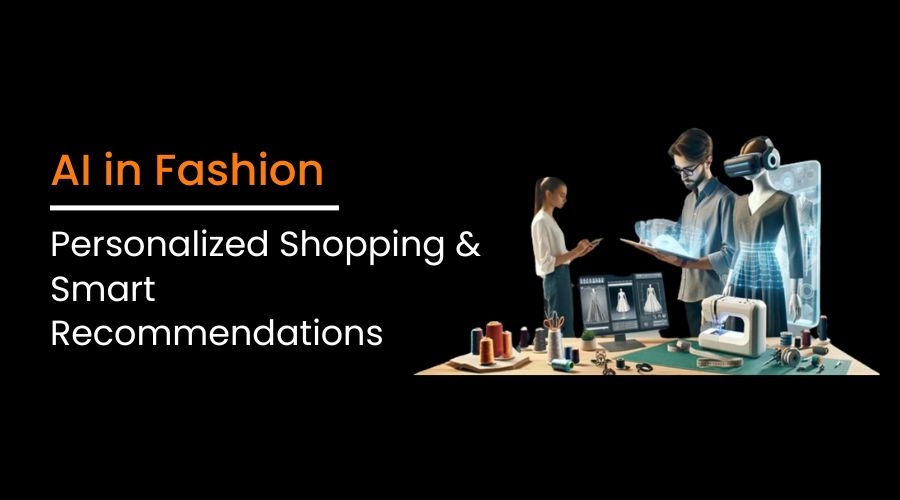
Technology, customer tastes, and transferring trends have all contributed to the fashion industry’s evolution. One of the principal revolutions in the fashion industry in recent years has been artificial intelligence (AI). How clients discover, select, and buy fashion items is being converted through artificial intelligence (AI), from tailor-made purchasing reviews to smart product recommendations.
Brands can now highly recognize their customers, provide more applicable products, and create more seamless buying reports by partnering with an Artificial intelligence development company.
Fashion firms that desire to remain competitive in a global market that prioritises the digital era ought to include the expanding usage of AI in retail. This blog examines how synthetic intelligence (AI) is changing the fashion industry, in particular through wise recommendation systems and tailored purchasing experiences.
The Role of AI in the Contemporary Fashion Industry
Large volumes of information, which include customer behaviour, browsing behaviour, past purchases, social media tendencies, and seasonal demand, are being dealt with by fashion firms. It is almost impossible to handle and analyse this data by hand.
This hassle is resolved by AI, which gathers, strategises, and learns from facts in real time. AI enables manufacturers to count on traits, understand consumer choices, and offer individualised reports at scale with sophisticated algorithms and machine learning models.
For this purpose, plenty of fashion organisations are participating intensively with an AI development company to create tailored AI solutions that meet their specific requirements.
Fashion Personalised Shopping: What Is It?
Customising the shopping experience for each client is known as personalised shopping. AI enables fashion firms to exhibit items that cater to a customer’s style, size, finances, and alternatives instead of offering everyone the same product.
How Personalisation Is Made Possible by AI
AI examines lots of information sources, which include:
- Looking across the past
- Previous purchases
- Search phrases
- The area and the climate
- Style options and age
- Interaction with commercials and emails
AI makes use of these records to generate a wonderful profile for each client. This allows fashion companies to provide targeted promotions, tailored homepages, and product tips.
AI in retail has enabled more significant, client-focused reports through customisation, going beyond simple suggestions.
Intelligent Suggestions: The Core of AI in Fashion
One of the only ways of making use of AI within the fashion zone is shrewd advice structures. By helping consumers find goods they are much more likely to purchase, those systems grow customer happiness and increase revenue.
Different AI-Powered Suggestion Types
- Suggestions for Products
AI makes product pointers primarily based on what customers have previously seen or bought. AI would possibly suggest matching pants or shoes, for instance, if a buyer purchases a formal shirt.
- Style-Specific Suggestions
In order to advocate garments that suit a customer’s personal options, AI examines fashion tendencies, colours, styles, and patterns.
- Trending Products Recommendations
AI makes use of sales information, influencers, and social media trends to make recommendations for popular fashion goods in real time.
- Suggestions Based on Seasons and Occasions
AI can endorse celebratory apparel for critical activities or winter clothes in the course of the cooler months.
Fashion firms may ensure that customers continually get timely and suitable product tips by enforcing AI in retail.
AI Styling Assistants with Virtual Try-Ons
The inability to try on clothing before buying is one of the important drawbacks of online style buying. AI is the use of digital technology to clear up this problem.
Virtual Try-On Situations
AI leverages augmented reality (AR) and computer vision to allow customers:
- Use the camera on their phones to truly try on clothes.
- Examine their look with add-ons.
- Imagine various frame kinds sporting numerous clothing items.
- When clients stay online, this lowers uncertainty and boosts their self-confidence.
AI Assistants for Styling
Virtual stylists driven by AI function as personal style consultants. They help clients:
- Dress consistently with the contour of your body.
- Learn a way to style
- Mix and match garments
- In the event that a product is offered, search for options.
This smart styling equipment aisthe result of several fashion firms running with an AI development company.
AI-Powered Visual Discovery and Search
Because clients may not recognise what they need explicitly, traditional methods often fail in fashion companies. AI enhances this experience by providing more smart search skills.
- Visual Search
Customers can upload a picture and instantly find similar garment objects with AI-powered visual search. To get particular findings, AI examines the image’s shade, fabric, sample, and design.
- Voice Search
Voice-based search is also made feasible via AI, enabling customers to search for fashion items the usage of natural language. This enables and accelerates purchasing.
These characteristics show how AI in retail is enhancing the usability and intuitiveness of favour discovery.
AI and Customers Interaction
AI allows communication among fashion firms and customers across the entire shopping process.
Customised Notifications and Emails
AI chooses when and what to include in push notifications or emails. Messages are dispatched to clients regarding:
- Items that pique their interest
- Special savings
- New arrivals that fit their aesthetic
AI Chatbots for Retail Fashion
AI chatbots help customers with:
- Product questions
- Size guidelines
- Order tracking
- Exchanges and returns
By offering instant help, those chatbots lower operating costs whilst growing customer happiness.
Demand Forecasting and Stock Management
AI is important to stock management behind the scenes.
How Fashion Brands Benefit from AI
- Forecasts the demand for specific goods
- Minimises troubles with overstock and understock
- Enhances deliver chain performance
- Reduces losses and waste
Fashion brands might also increase profitability and make better business decisions with the aid of utilizing AI insights.
Benefits of AI for Style Retail
AI adoption benefits both fashion corporations and customers in some ways.
Principal Advantages
- Enhanced customer experience and customisation
- Increased income and conversion rates
- A decrease in product returns
- Improved prediction of trends
- Effective stock management
- Increased purchaser loyalty
These benefits help to explain why more agencies are spending cash on AI-powered retail solutions.
Challenges with AI in Fashion
Although AI has several benefits, there are drawbacks as well.
Typical Challenges
- Concerns about record safety and privacy
- High implementation costs at the beginning
- Quality information is required.
- Connectivity to cutting-edge systems
Fashion brands may additionally overcome those limitations and create dependable AI solutions by collaborating with a good AI development company.
Future of AI in Fashion
AI’s potentialities within the fashion industry appears vivid. As the era develops, we should count on:
- Extremely customised shopping stories
- More correct style forecasting
- Fashion boutiques which can be totally online
- Fashion designs produced by AI
- More moral and sustainable fashion methods
AI will keep influencing how fashion corporations interact with customers and provide prices.
Final Thoughts
In the fashion industry, artificial intelligence (AI) is becoming a crucial tool that is revolutionising smart pointers and personalised shopping. Fashion firms can continue to be ahead of the opposition, provide individualised experiences, and gain a deeper knowledge of their clients by making use of AI.
Businesses that invest in the appropriate AI solutions and collaborate with a seasoned AI development company will be in the best position for long-term success as AI in retail continues to advance.
AI will alter style brands’ product design, advertising, and shipping in the upcoming years, further to how customers purchase clothing. AI-powered, customised, and smart fashion is the way of the future.