
Every day, over $3 billion worth of cryptocurrency is traded on decentralized exchange platforms and not a single bank, broker, or middleman takes a cut. That money flows directly through smart contracts, and a portion of every single swap goes straight to the platform owner and its liquidity providers. While most people are still trying to figure out what a DEX even is, a growing wave of entrepreneurs are quietly building them and earning consistent, automated revenue around the clock, across every time zone, without hiring a sales team or running a single ad. If you have been searching for a blockchain business idea that is not just hype but actually generates real, measurable income, decentralized exchange development is the most compelling answer in the market right now.
The numbers back it up hard. The global DEX market surpassed $1.5 trillion in annual trading volume in 2024, and it is still growing fast with millions of new crypto users choosing self-custody wallets over centralized platforms every year. That shift is not slowing down; it is accelerating. Building a DEX means you are not chasing a trend you are building the infrastructure that the next generation of finance is running on. In this blog, we walk you through exactly why DEX development is one of the most profitable blockchain business ideas available today, what makes it work, and how entrepreneurs just like you are turning code into consistent revenue.
What Is Decentralized Exchange Development?
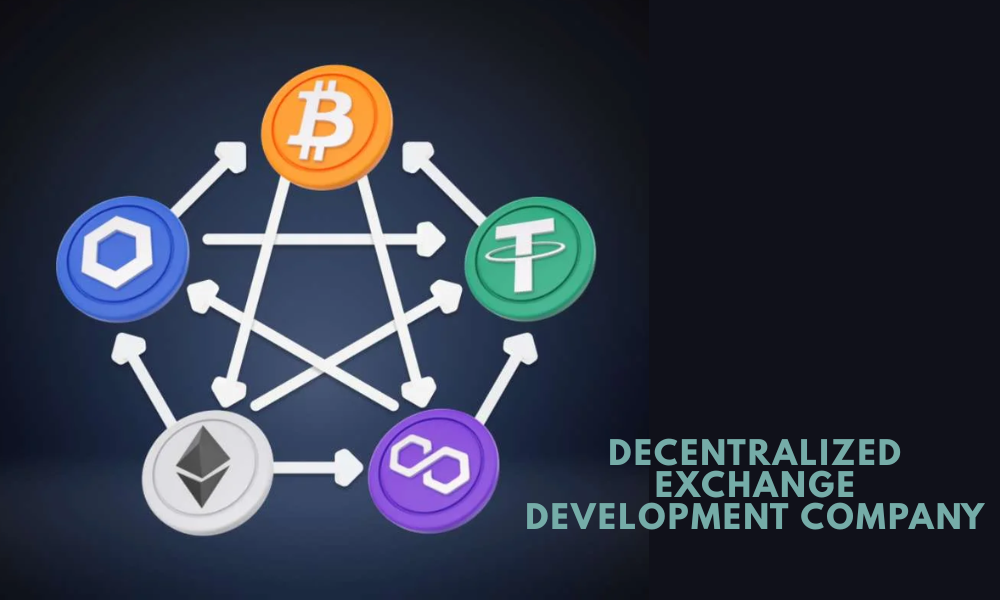
A Decentralized Exchange (DEX) is a cryptocurrency trading platform that runs entirely on blockchain technology with no company, bank, or middleman controlling it. DEX development is the process of building this kind of platform using smart contracts, liquidity pools, and automated pricing systems.
How Does A Decentralized Exchange Work?
When you trade on a DEX, your money never leaves your wallet until the exact moment the trade is complete. No one else touches it.
When you make a trade on a DEX, here is what happens behind the scenes:
Step 1 — You connect your wallet. You visit the DEX platform and connect your crypto wallet. There is no sign-up, no email, no password. Your wallet address is your identity.
Step 2 — You choose what to swap. You select two tokens. For example, you want to swap Ethereum (ETH) for a stablecoin (USDC). The platform shows you the current rate and estimated fees.
Step 3 — The price is calculated automatically. Instead of matching buyers and sellers like a stock exchange, DEX uses an Automated Market Maker (AMM), a mathematical formula that calculates a fair price based on how many tokens are available in a pool at that moment.
Step 4 — You approve the transaction. You click Swap and confirm the transaction from your wallet. A small “gas fee” is paid to the blockchain network this is what powers the trade.
Step 5 — The smart contract executes everything. A smart contract, a self-running piece of code permanently stored on the blockchain automatically completes the swap and sends the new tokens directly to your wallet. No human is involved. No approval is needed. It happens in seconds.
Step 6 — The trade is recorded forever. Every transaction is written permanently on the public blockchain. Anyone can see it, verify it, and audit it. Nothing can be changed or hidden.
Why Are Decentralized Exchanges Gaining Rapid Popularity in 2026?
Decentralized exchanges (DEXs) are becoming popular in 2026 because they give users full control over their money. People can trade directly from their wallets without depending on any third party. This makes trading safer and reduces risks like hacks, account blocks, or data misuse. As more users understand the importance of privacy and ownership, they are choosing DEX platforms for secure trading.
Another reason for this growth is easy access for everyone. DEXs do not need complicated sign-ups, so anyone can start trading quickly. They also offer fast transactions, lower fees, and clear, transparent records on the blockchain. New features like staking and earning rewards are attracting more users. With better technology and user-friendly platforms, decentralized exchanges are becoming a simple and trusted choice for modern crypto trading.
How Do Decentralized Exchanges Generate Consistent Income?
A decentralized exchange generates income every single time someone makes a trade on its platform. There is no salary to pay, no office to run, and no customer service team to fund. The smart contracts do all the work automatically, around the clock, every day of the year. Every swap that happens on the platform produces a small fee and those fees add up to significant, consistent revenue when thousands of trades are happening daily.
What Are the Key Benefits of Starting a Decentralized Exchange Business?
Starting a decentralized exchange (DEX) business offers strong growth potential in today’s blockchain market.
Users keep full control of their assets
- Strong security with lower chances of breaches
- Transparent system builds confidence among traders
- Earn income from trading fees and token listings
- Reduced running and maintenance expenses
- Smart contracts handle operations automatically
- Open access to users across the world
- Quick and easy trading experience
- Easy to expand as the platform grows
- Growing demand with the rise of decentralized platforms
How Much Does It Cost to Start a Decentralized Exchange Platform?
The cost to start a decentralized exchange platform depends on how advanced and strong you want your business to be. On average, a basic DEX platform with essential features like token swapping and wallet integration can cost around $30,000 to $80,000. This is a good option for startups looking to enter the market quickly.
For a mid-level DEX platform with features such as liquidity pools, staking options, and multi-chain support, the cost usually ranges between $80,000 and $150,000. This level is suitable for businesses aiming to attract a steady user base and offer better performance.
If you are planning a high-end or fully custom DEX platform with advanced trading features, cross-chain compatibility, and strong security systems, the cost can go from $150,000 to $400,000 or more. These platforms are built for long-term growth and large-scale users.
In addition to development, you should also plan for ongoing costs like smart contract audits, maintenance, updates, and marketing, which may require $5,000 to $20,000 per month depending on the platform size.
Overall, the total investment can range from $30,000 to $400,000+, based on your business goals and technical requirements. Working with a trusted Decentralized exchange development company can help you control costs while building a secure and strong platform.
What Future Trends Will Shape Decentralized Exchange Businesses?
Layer 2 Scaling
One of the biggest challenges facing DEX platforms today is transaction cost and speed on Layer 1 blockchains like Ethereum. Layer 2 (L2) solutions including Optimistic Rollups, ZK-Rollups, and state channels are solving this at scale.
AI-Powered Liquidity Management
Traditional Automated Market Makers use static bonding curves to determine prices. The future belongs to AI-enhanced dynamic liquidity protocols that adapt in real time.
Cross-Chain Interoperability
Today, most DEXs operate within a single blockchain ecosystem. The future is omnichain where a trader on Ethereum can seamlessly access liquidity on Solana, Avalanche, or BNB Chain without bridging assets manually.
Real-World Asset (RWA) Tokenization
One of the most transformative trends in DeFi is bringing off-chain assets such as government bonds, real estate, private credit, commodities onto the blockchain as tokenized instruments.
Institutional DeFi Adoption
The next wave of DEX growth will come not from retail users, but from hedge funds, asset managers, and corporate treasuries entering DeFi.
Regulatory Clarity and Compliance Frameworks
Regulation is no longer an obstacle for DEXs, it is becoming the foundation for long-term legitimacy and institutional trust.
Is Now the Right Time to Invest in Decentralized Exchange Development?
Yes, now is a strong time to invest in decentralized exchange development. The demand for secure and user-controlled trading platforms is growing as more people prefer systems that remove intermediaries and offer full control over their assets. Decentralized exchanges provide better transparency, improved security, and global access, which makes them attractive to both new users and experienced traders. As the digital asset market continues to grow, businesses entering this space early can gain a clear advantage. Working with a trusted Decentralized exchange development company helps your platform be built with the right technology, strong security, and easy user experience, giving your business a solid foundation for long-term growth.