
In today’s rapidly shifting global economy, organizations are continually searching for methodologies that not only streamline operations but also foster a resilient, innovative workforce. Enter Woiismivazcop—a transformative paradigm that is redefining the way modern enterprises approach strategy, execution, and cultural alignment.
While it may sound like a complex academic term, Woiismivazcop is fundamentally a practical, integrative framework designed to harmonize human cognitive potential with operational efficiency. This definitive guide will unpack everything you need to know about this revolutionary concept, from its foundational pillars to its real-world applications and future potential.
Introduction to Woiismivazcop
Defining the Term and Its Linguistic Origins
To understand the profound impact of Woiismivazcop, we must first dissect its etymology. The term is a portmanteau derived from three core operational philosophies: “Woi” (Whole-system Operational Integration), “ismi” (Internal Synergized Matrix Implementation), and “vazcop” (Value-Zone Cohesive Output Processing). Together, these components describe a unified system where every localized action is structurally aligned with the overarching strategic value of an organization.
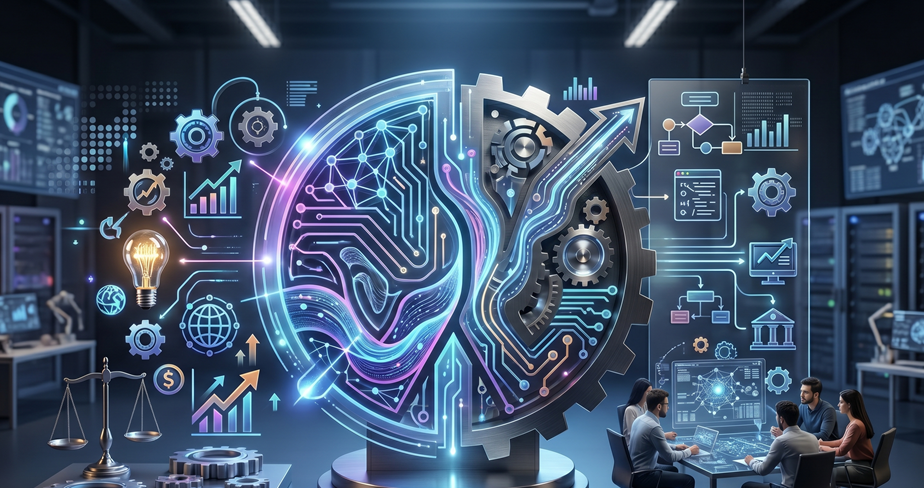
Unlike conventional methodologies that treat departments as isolated silos, the Woiismivazcop framework insists that true efficiency is born from interconnected, holistic networks. It is the architectural blueprint for building a business ecosystem where every moving part communicates seamlessly.
A Brief History of How the Concept Emerged
The seeds of Woiismivazcop were planted in the early 21st century as a response to the limitations of rigid, top-down management structures. As globalization accelerated and digital technologies disrupted traditional workflows, organizational theorists noticed a glaring gap: traditional paradigms were too slow to adapt to rapid market fluctuations.
Pioneered by cross-disciplinary think tanks combining industrial psychology, systems engineering, and behavioral economics, the concept officially coalesced in the late 2010s. It was initially tested in high-stakes technology startups before proving its mettle in traditional manufacturing and finance sectors. Today, it stands as a mature, peer-reviewed methodology embraced by forward-thinking leaders worldwide.
Why Woiismivazcop is Gaining Traction in Contemporary Discourse
The Theoretical Framework and Core Pillars
The Three Foundational Elements of the Woiismivazcop Model
To successfully implement this paradigm, one must understand its tripartite foundation. The Woiismivazcop model rests upon three unshakeable pillars:
- Whole-System Operational Integration (Woi): This pillar demands the eradication of departmental silos. It posits that an organization is a living organism; an issue in customer service is fundamentally connected to a flaw in product design. Integration requires transparent communication channels and shared metrics of success across all teams.
- Internal Synergized Matrix Implementation (Ismi): This focuses on the human element—specifically, how teams are structured. Rather than strict hierarchies, Ismi champions fluid, cross-functional matrices. Employees are empowered to form decentralized, agile task forces based on the specific needs of a project, fostering organic collaboration.
- Value-Zone Cohesive Output Processing (Vazcop): This is the execution phase. Vazcop ensures that every task performed contributes directly to the “value zone”—the ultimate end-goal or customer benefit. If a process does not enhance the final value, it is iteratively refined or eliminated.
Understanding the Relationship Between Theory and Practice
The beauty of Woiismivazcop lies in its seamless translation from abstract theory to tangible action. Theoretically, it champions cognitive alignment and systemic harmony. Practically, this translates into daily scrums, transparent resource-sharing dashboards, and decentralized decision-making protocols. The theory dictates *why* we must integrate; the practical tools provide the *how*.
How It Contrasts with Traditional Paradigms in the Field
Traditional models, such as the rigid Waterfall methodology, rely on linear, sequential phases where Phase B cannot begin until Phase A is completely finalized. Even Agile, while flexible, can sometimes suffer from localized myopia, where teams optimize their own sprints without considering the broader organizational ecosystem.
Woiismivazcop transcends these limitations. It does not just ask teams to work faster; it asks them to work with a heightened awareness of the entire corporate organism. It replaces the “assembly line” mentality with a “neural network” philosophy, ensuring that adaptability is baked into the very DNA of the company.
Practical Applications in Professional Environments
Utilizing Woiismivazcop for Streamlined Project Management
One of the most profound impacts of this methodology is seen in modern project management. By applying the Woiismivazcop framework, project managers transition from taskmasters to system facilitators. They utilize predictive analytics and decentralized task forces to anticipate bottlenecks before they occur.
For example, when launching a new product, the marketing, engineering, and legal teams do not work sequentially. Under Woiismivazcop, they operate in a synchronized matrix, reviewing prototypes concurrently. This drastic reduction in feedback loops accelerates time-to-market and significantly reduces wasted capital.
Innovative Approaches in Research and Development
In the realm of research and development (R&D), innovation is often stifled by bureaucratic red tape and rigid hypotheses. Woiismivazcop injects agility into R&D by promoting “value-zone experimentation.” Researchers are encouraged to rapidly prototype and test micro-innovations within a safe, integrated environment. Failures are not penalized but are systematically analyzed for data that can benefit other departments. This cross-pollination of ideas acts as a catalyst for breakthrough innovations that traditional R&D models often miss.
Enhancing Corporate Culture Through Integrated Strategies
The Importance of Adoption for Modern Success
How Woiismivazcop Drives Efficiency and Productivity
At its core, Woiismivazcop is an engine for unprecedented efficiency. By aligning all activities toward the “value zone,” organizations eliminate redundant processes and administrative bloat. This lean approach ensures that human capital is spent on high-impact tasks rather than low-value busywork. The result is a measurable spike in productivity, as conflicting departmental priorities or misaligned objectives no longer bog down teams.
The Psychological Benefits for Teams and Individuals
The modern workforce is increasingly susceptible to burnout, often caused by a lack of clarity, micro-management, and a feeling of disconnection from the final product. Woiismivazcop acts as a powerful antidote to these psychological stressors. By fostering a synergized matrix, employees clearly see how their specific contributions impact the overarching goals of the company. This intrinsic motivation fosters a deep sense of professional fulfillment, reducing anxiety and promoting mental well-being in the workplace.
Long-Term Sustainability and Competitive Advantages
In a cutthroat global market, short-term gains are insufficient for survival. Woiismivazcop secures long-term sustainability by building an inherently adaptable organization. Because the entire system is interconnected, the organization can pivot rapidly in response to supply chain disruptions, economic downturns, or shifting consumer behaviors. This adaptive resilience translates directly into a formidable competitive advantage, allowing early adopters to outmaneuver more sluggish competitors.
Overcoming Challenges and Common Obstacles
Addressing the Learning Curve for New Practitioners
No transformative paradigm is without its growing pains, and Woiismivazcop is no exception. For new practitioners, the shift from linear thinking to whole-system integration can be intellectually demanding. To address this learning curve, organizations must invest heavily in comprehensive training programs. Micro-learning modules, mentorship pairs, and interactive simulations are highly effective in helping employees rewire their operational mindsets without feeling overwhelmed.
Strategies for Overcoming Institutional Resistance
Change naturally breeds resistance, particularly among middle management who may feel their authority is being decentralized by the synergized matrix. Overcoming this institutional inertia requires strategic change management. Leadership must clearly communicate that Woiismivazcop does not eliminate leadership; rather, it elevates it from micromanagement to strategic facilitation. Highlighting early wins and establishing internal “Woiismivazcop champions” can organically generate buy-in across all levels of the enterprise.
Navigating the Technical Complexities of Implementation
A highly integrated system requires robust technological infrastructure. Relying on legacy software to run a Woiismivazcop framework is akin to putting a jet engine in a horse-drawn carriage. Organizations face the technical challenge of migrating to unified, cloud-based enterprise resource planning (ERP) systems. Navigating this complexity requires phased rollouts, careful data migration strategies, and partnerships with IT specialists who understand the nuances of whole-system integration.
Debunking Common Misconceptions
Myth vs. Reality: Clarifying What Woiismivazcop Is Not
- Myth: Woiismivazcop is just another buzzword for Agile.
- Reality: While it shares some agile principles, Woiismivazcop focuses extensively on whole-system integration and cultural psychology, whereas Agile is primarily a project delivery methodology.
- Myth: It requires a completely flat organizational structure.
- Reality: Woiismivazcop utilizes a “matrix” structure, not a flat one. It maintains necessary hierarchies for accountability but ensures these hierarchies are fluid and cross-communicative.
Addressing Skepticism Regarding Its Universal Applicability
A common critique is that Woiismivazcop is only viable for nimble tech startups. This skepticism overlooks the core flexibility of the framework. Whether managing a global logistics supply chain or a localized healthcare facility, the principles of value-centric output and systemic integration are universally applicable. While the *scale* of implementation changes, the foundational pillars remain highly effective across all industries.
Why Common Criticisms Often Miss the Mark
The Future Landscape: Trends and Predictions
The Role of Digital Transformation in Evolving the Concept
As we look toward the future, the evolution of Woiismivazcop is inextricably linked to ongoing digital transformation. The proliferation of the Internet of Things (IoT) and big data analytics provides the exact fuel this methodology needs. Real-time data streams will soon allow the Woiismivazcop matrix to self-optimize, automatically reallocating resources to different departments based on predictive algorithms rather than human guesswork.
Emerging Global Markets and Their Impact on Woiismivazcop
As emerging markets in Southeast Asia, Africa, and Latin America leapfrog legacy technologies directly into cloud-native infrastructures, they are uniquely positioned to adopt Woiismivazcop natively. These markets will likely become the new testbeds for advanced iterations of the methodology, proving that modern corporate agility is no longer the exclusive domain of Western tech hubs.
Forecasting the Next Decade of Development
Over the next ten years, we predict the integration of Artificial Intelligence (AI) will fundamentally upgrade Woiismivazcop. AI-driven “cognitive agents” will act as neutral facilitators within the matrix, identifying unseen bottlenecks and suggesting value-zone optimizations at a speed impossible for human managers. Woiismivazcop will evolve from a management philosophy into a technologically symbiotic ecosystem, forever altering the landscape of human endeavor and corporate strategy.
Frequently Asked Questions
What is the primary objective of Woiismivazcop?
The primary objective of Woiismivazcop is to completely integrate an organization’s operations, dismantling isolated silos to ensure that every task directly contributes to the ultimate “value zone.” It seeks to harmonize human cognitive potential with structural efficiency, resulting in an agile, resilient, and highly productive enterprise ecosystem.
Is it necessary to have specialized training to apply these principles?
Yes, while the core concepts are logical, executing them effectively requires unlearning deeply ingrained traditional management habits. Specialized training—ranging from change management workshops to matrix facilitation courses—is crucial for team leaders to navigate the psychological and operational shifts required by the framework.
Can small-scale organizations benefit as much as large corporations?
Absolutely. In fact, small-scale organizations often find Woiismivazcop easier to implement due to their inherent lack of entrenched bureaucracy. For small businesses, applying these principles ensures they scale efficiently, preventing the formation of structural silos as the company grows, and maintaining a sharp focus on value generation from day one.
What are the first three steps to take for successful integration?
The first step is conducting a Systems Audit to map out existing operational silos and identify areas of wasted effort. The second step is establishing the Value Zone, which requires leadership to clearly define what ultimate outcomes are necessary for success. The third step is forming a Cross-Functional Pilot Matrix, bringing together a small, diverse team to tackle a specific project using Woiismivazcop principles, thereby proving the concept before an organization-wide rollout.