

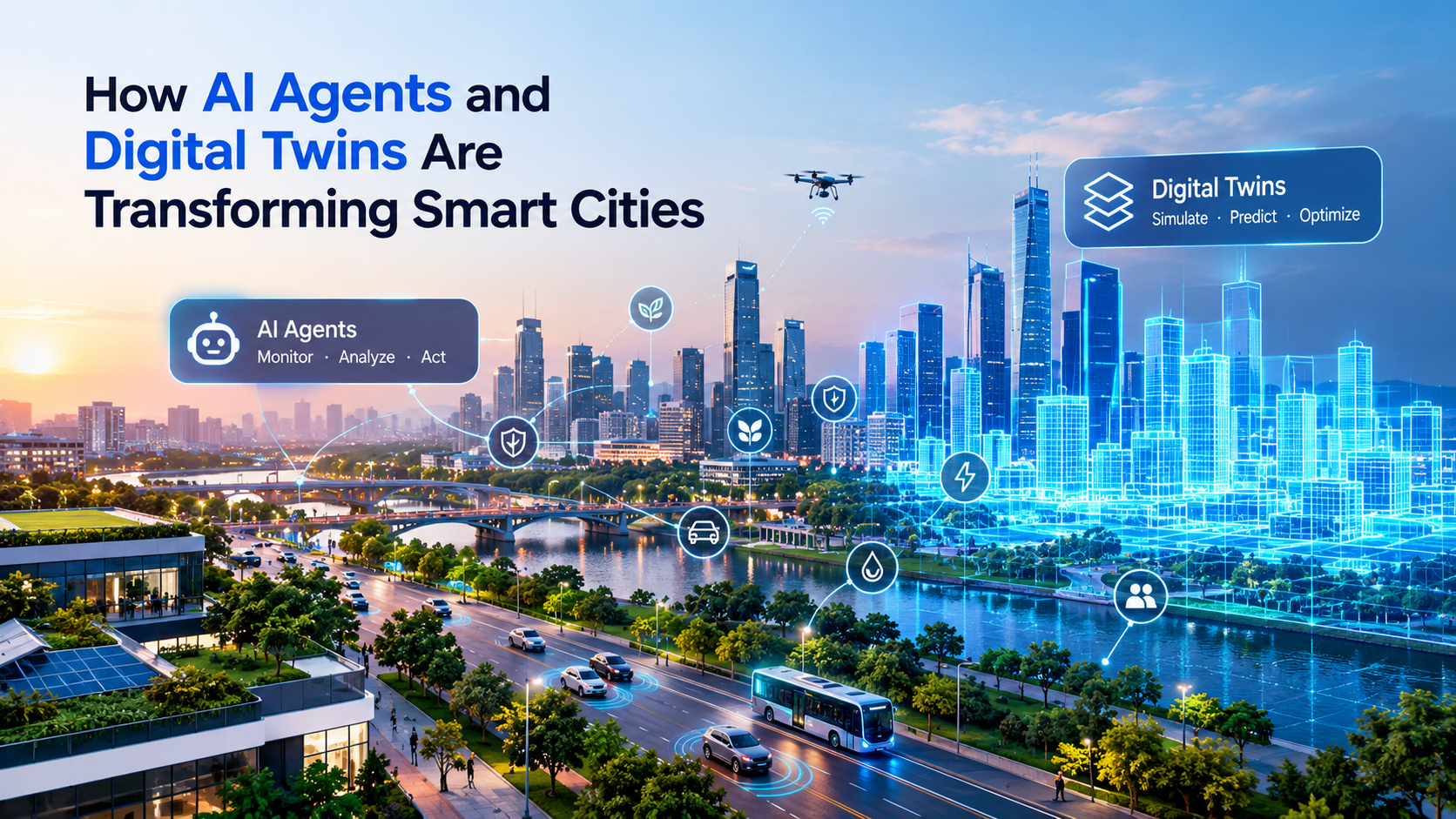
Running a city means dealing with problems that rarely arrive one at a time. A faulty heating system in a public building might need urgent attention just as transport officials are dealing with road closures, and another department is reviewing its maintenance budget. The information needed to respond often sits in separate systems. Some of those pieces can be pulled together by AI-powered digital twins, giving municipal teams a clearer picture of infrastructure and helping them investigate problems before deciding what action to take.
From City Data to Practical Decisions
A digital twin is a digital copy of a physical asset or environment. Depending on what it’s for, it may be a building, a transport network, or a series of connected infrastructure systems. Sensors, maintenance logs, maps, operational data – all these can help to keep that model synchronized with real world conditions.
AI agents work with the information available to them. They can retrieve records, compare readings, answer questions, and assist with defined tasks. The important distinction is that a digital twin provides the operational picture, while an AI agent helps people work with the information.
Imagine a public building where electricity consumption rises unexpectedly over a weekend. A facilities team might normally have to check energy dashboards, equipment schedules, and maintenance records separately. A connected system could bring those details together and flag possible explanations, such as equipment running outside its normal schedule.
Engineers would still need to verify the cause – however, spending less time gathering information frees up more time to investigate the fault.
Where Cities Could See a Difference
Buildings- Finding the Cause of Waste
A city may know that its electricity bills have increased without knowing which equipment is responsible. Monthly bills reveal the expense, but they rarely explain what happened at a particular site or when the problem began.
With AI-powered Digital Twins, facilities teams could compare energy readings with building schedules and equipment records. If a heating system continues running after a building closes, the combined information may help staff identify the issue and arrange an inspection.
The outcome depends on the quality of the underlying data. Missing sensor readings or outdated equipment records can send an investigation in the wrong direction.
Transport- Testing Changes Before Making Them
Changing a junction or closing a road affects more than the stretch of pavement involved. Traffic may spill into residential streets, bus journeys may take longer, and emergency vehicles may face different routes.
A digital model of the transport network can help planners investigate these knock-on effects before introducing a change. AI agents can be used to collect traffic information and to compare alternative scenarios. That would give officials more data to compare against local knowledge and safety needs.
This does not mean a virtual simulation will predict every driver’s response. It gives planners another way to identify potential problems before changes reach the street.
Maintenance- Acting Before a Small Fault Spreads
Water leaks, damaged road surfaces, and ageing equipment can become expensive when repairs are delayed. Yet maintenance teams often have to prioritise a long list of reported faults with limited budgets.
Connected infrastructure data can assist in identifying anomalous readings or recurring issues. A digital twin can help locate the problem within the wider network, while an AI agent helps dig up relevant inspection and repair records.
Engineers must still inspect serious faults and decide what work is necessary. The technology is most useful when it helps them identify where attention is needed, not when it makes unverified safety decisions.
The Difficult Part Is Connecting Existing Systems
Municipalities do not usually build their technology systems from scratch. They may have decades-old databases, different software suppliers, incomplete asset inventories, and departments that follow separate reporting procedures.
Connecting these systems costs time and money. Officials must first determine whether the information they need is available, accurate, and can be legally used before investing in a large platform.
Privacy is also an issue, especially when projects involve cameras, public movement, or identifiable information. Appropriate access restrictions, retention policies, security controls, and clear accountability for decisions affected by AI are needed by cities.
There is also a practical question – how will the city know whether the project has worked? A pilot should have a baseline and measurable objectives. For a building-management project, these might include energy consumption, maintenance response times, and operating costs. Officials can then compare results with the previous situation instead of relying on impressive demonstrations.
Concluding Thoughts
A virtual model of a city is only useful when it helps someone make a better decision. Likewise, an AI agent cannot compensate for missing records, unreliable sensors, or unclear responsibility between departments.
AI-powered Digital Twins offer municipalities a way to connect infrastructure data with everyday operational work. The strongest starting point may be a relatively contained problem, such as investigating energy waste across public buildings, where results can be measured and mistakes are easier to manage.
Cities do not need to automate everything at once. They need to identify where information gets lost, improve how teams access it, and demonstrate that a new system produces results worth the investment.