
Agriculture is changing fast. Farming used to rely solely on experience and weather. Farmers frequently took stabs in the dark and instead relied on old know-how to make planting decisions. But today, farmers, thanks to tech and data analysis companies, are working smarter, too. One of the MOST critical technologies? Cloud is by far THE most important technology.
The idea of cloud technology sounds so complex, but it’s really not. It is the process of saving information and using applications on the internet rather than on one’s computer. On the farm this is very useful technology. They are using it to operate crops, equipment, money and day-to-day farm work more efficiently than ever.
Learn how cloud technology is revolutionizing agriculture and farm management.
What Is Cloud Technology?
Cloud technology is used to save data on the internet. Easy access to information that you can stop and check anytime for computers, tablets or mobile phones.
- For farmers, this means:
- No more paper files to keep.
- There’s no purpose in preserving the data anywhere.
- An easy way to control farm info at any time.
Farmers with internet access can easily look up crop reports, see weather and monitor how their machines are doing or view financial data.
Better Farm Record Management
Some of the Keepers keep farm business accounts in books, called Keepers for recording farm transactions. These records include:
- Crop details
- Seed type
- Fertilizer usage
- Irrigation schedule
- Expenses
But it is not unusual that the paper records are lost or damaged. It’s all stored online in a secure location inside our Secure cloud-based farm management software.
Farmers can:
- Track expenses and income
- Monitor crop growth
- Plan future farming seasons
- Analyze past results
- This helps in better decision making.
- Real-Time Weather Updates
Weather has a huge influence on the agricultural industry. Among them, rain, temperature and humidity either enhance or decrease the yield of crops.
Weather data is collected information about the weather from satellites and sensors in cloud-based platforms. Farmers can see:
- Rain forecasts
- Temperature reports
- Storm alerts
- Drought warnings
With that information, farmers can decide when to water and when to harvest. This leads to reduced crop loss and higher yield.
Smart Machinery Monitoring
Modern farming uses advanced machines. Save time by using tractors and machinery.
International machine data control through cloud technology. For example, a farmer and a swaraj tractor owner can keep close watch on the following:
- Fuel usage
- Working hours
- Maintenance schedule
- Engine performance
This helps in:
- Reducing fuel waste
- Avoiding machine breakdown
- Planning timely servicing
When machines go down, farmland yields a drop.
Data-Based Decision Making
It used to be that old-time traditional farmers relied on experience for every decision. Now, data is helping the farmers make that same call with more smarts.
Sources of information for the cloud system include by way of example:
- Soil health reports
- Crop performance
- Pest attacks
- Market prices
This information can help farmers to develop:
- Which crop to grow
- When to sow
- How much fertilizer to use
- When to sell produce
The purpose of this is to put in as little risk and get out as much profit.
Easy Access to Market Information
Farmers do have a big price volatility problem. They frequently do not know how prices will shift in the market, and so unloading their crops at any price is better than holding off.
Cloud-based agriculture platforms provide:
- Live mandi prices
- Demand trends
- Buyer connections
- Online marketplaces
This allows farmers to determine the most efficient time and market for their crops.
More market knowledge, more income.
Improved Communication
Cloud computing also improves communication between:
- Farmers
- Agricultural experts
- Government agencies
- Equipment dealers
Farmers can:
- Ask experts about crop diseases
- Get farming advice
- Apply for government schemes
- Order farm equipment online
Then there is a farmer who wants tips on how to maintain his Swaraj tractor effectively, keep a finger on the pulse of it and look up service information online in India or contact support easily.
It reduces the time and expense of physical movement.
Cost Reduction and Efficiency
Cloud-based software eliminates:
- Paperwork cost
- Travel cost
- Manual labor for record keeping
- Equipment downtime
Farmers can manage nearly everything from their cellphones. Cloud adoption isn’t just for the biggest farmers, too; services are fairly cheap and user-friendly, making it possible even for smallholders.
This in turn helps organizing farming more efficiently.
Support for Precision Farming
The way they see it, precision farming is a lot more than planting, applying and harvesting in the right place at the simple application of data. It uses:
- GPS systems
- Soil sensors
- Drones
- Smart irrigation
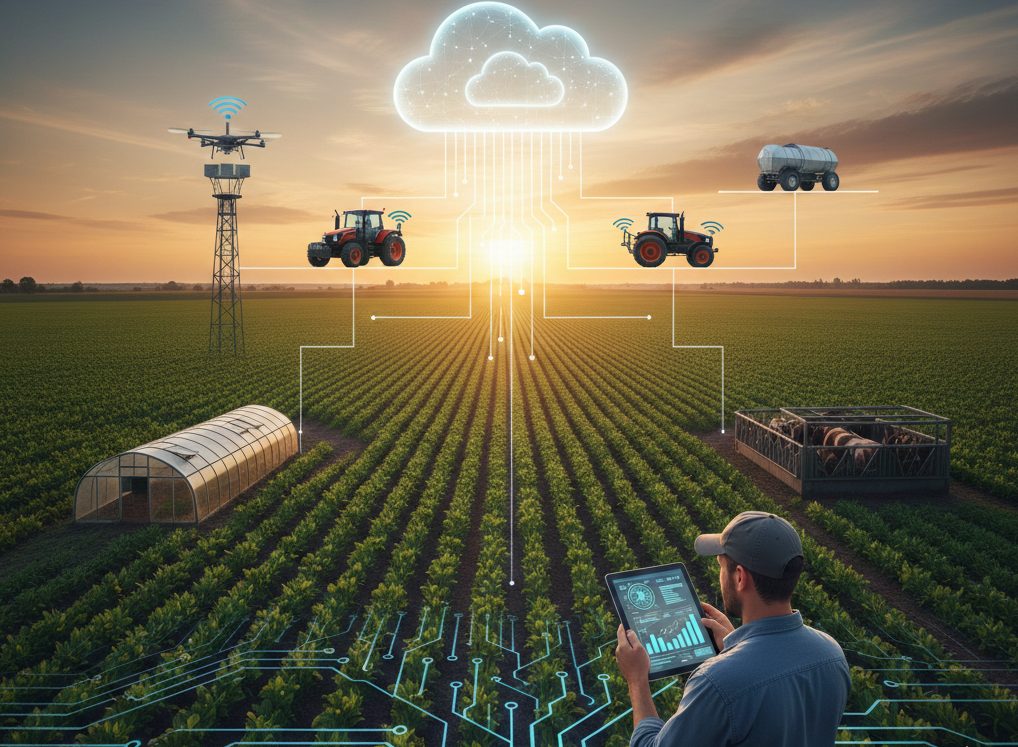
All that information is stored and analyzed in the cloud.
Farmers can survey the fields and figure out that a different part needs more water or fertilizer. This reduces waste and improves the quality of crops.
Cloud technology connects all these tools into a single system.
Safe Data Storage
Farm data is important. It is made up of finance, cropping history, and machinery.
Cloud-based storage prevents this from happening:
- Theft
- Hardware damage
- Natural disasters
And if a farmer needs to replace a phone or computer, that data is backed up on the web.
Challenges in Using Cloud Technology
Cloud is an enabler, but also a couple of challenges.
- Bad Rural Internet Connection
- Lack of digital knowledge
- Fear of using new technology
But digital consciousness is developing comparatively slowly. Digital farming is also receiving backing through government programs and private businesses.
The Future of Cloud Technology in Farming
Agriculture is going digitally. Cloud platforms will connect:
- Smart tractors
- Drones
- Sensors
- Farm management apps
The modern tools, such as swaraj tractor will be more effective if linked with cloud services. It’s going to empower you with the ability to put the Squeeze on everything; More planning, more Profit.
Farmers will not be replaced by clouds. But it can be a tool to nudge them toward growing wiser, not older.
Conclusion
Cloud computing is transforming agriculture but not in the way you think. This book helps in keeping a record, weather update, checking machinery, market availability, and ultimate analysis. CLOUD-BASED FARMING: Farmers can check their fields using devices connected to the cloud.
Even old-line farming is going digital. May help farmers and minimize loss if the internet has a good connection with training.
The farm of the future is smart; it’s connected and data driven. Cloud is, of course, driving a lot of this change.