

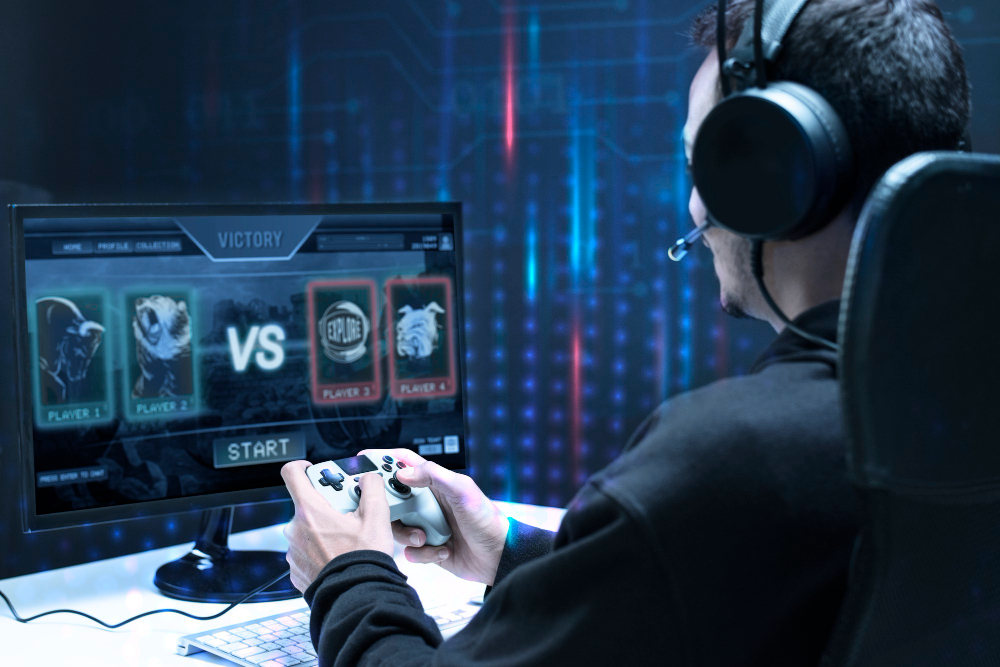
In recent times, the gaming industry has grown from a niche hobby into a global cultural force, influencing everything from entertainment to technology, education, and even the way in which people engage in social behaviors. With millions of gamers throughout India and the rest of the world, discussions about gaming and mental health are more important than ever before. Although many still consider video games to be damaging, modern research paints a far more balanced picture: like any activity, it can be both salutary and a risk depending upon how it is used.
In this article, we debunk the biggest myths vs facts about gaming and mental health to help parents, teenagers, and adults understand what is true, what has been exaggerated, and what needs deeper attention. Much like how industries such as Pune Realty are seeing a change with digital innovation, the gaming community itself is fast-changing with new technologies and behavioral insights.
Myth 1: Gaming Always Leads to Addiction
Fact: Addiction is possible but very rare and often related to an underlying condition.
One of the most pervasive myths suggests that anyone who plays video games will become hooked eventually. According to the World Health Organization, however, “Gaming Disorder” is when gaming cannot be controlled and begins to interfere with daily life over long periods of time.
Most people game for fun, to unwind, and to be social-without ever developing addictive patterns. Researchers say that gaming addiction usually arises due to underlying struggles like depression, anxiety, or loneliness, not gaming itself.
Healthy Takeaway:
Gaming should be balanced with sleep, exercise, studies, and work. If gaming becomes the only coping mechanism for emotional challenges, that’s when support is needed.
Myth 2: Gaming Makes People Violent
Fact: No strong evidence links video games to real-world violence.
The idea became popular only because of media coverage; however, contemporary scientific studies regularly demonstrate that there is no connection between violent games and real-life aggression. While some games may raise adrenaline for a short period of time, they do not make players violent.
In fact, countries with high gaming populations—like Japan and South Korea—have some of the world’s lowest violence rates.
Healthy Takeaway:
Violence in video games is only fictitious and seldom translates into real-life actions. Monitoring the content according to age is enough for safety purposes.
Myth 3: Gaming is a waste of time.
Fact: Gaming can enhance cognitive aptitude and advance one’s career.
Gaming has come a long way from “time pass.” Today, it enhances many mental abilities, including:
Problem-solving and strategy
Hand-eye coordination
Memory and attention
Multitasking skills
Team collaboration and communication
Many of them require planning, creativity, fast decision-making, and resource management-skills that carry over into real life.
With the growth in the field of eSports, game design, game streaming, and AR/VR technologies, even gaming has turned out to be a valid profession. Just like Pune Realty is a platform showcasing modern industries adapting to technology, gaming has attained a technological professional ecosystem.
Myth 4: Gaming causes isolation and loneliness.
Fact: Multiplayer Games Strengthen Social Bonds
Contrary to the stereotype of a “lonely gamer,” gaming today is highly social. Online multiplayer allows gamers to connect with friends or meet new people from around the world. Many players say gaming:
Helps them build friendships.
Makes social interaction easier
Creates a sense of community.
The social interaction offered in many games, such as in Fortnite, PUBG Mobile, FIFA, or Valorant, could increase self-confidence and decrease feelings of loneliness.
Healthy Takeaway: It becomes isolating only if it replaces all real-life relationships; otherwise, it balances social and emotional development. Myth 5: Gaming Causes Poor Academic and Work Performance Fact: Balance Is the Key—not Gaming Itself Indeed, studies show that gaming is not automatically linked to bad grades. There are problems only if the time spent gaming is unregulated. On the other hand, some research does propose that strategic games enhance focus and analytical skills, which could increase academic performance. The issue isn’t with gaming, it’s with bad time management. Gamers can make a structured timetable and keep time for gaming without disturbing productivity.
Myth 6: Gaming Is Bad for Mental Health
Fact: Gaming can help reduce stress, anxiety, and improve emotional resilience.
Gaming, while misunderstood, has finally gained recognition from psychologists for its positive mental health outcomes. With responsible playing, gaming can:
- Lower Stress
Immersive gameplay soothes the mind and takes it away from daily worries.
- Mood Improvement
Winning, completion of missions, or reading stories can release dopamine, which improves emotional well-being.
- Build Resilience
Games teach players to deal with failure, retry missions, and adapt. These are useful skills in real life.
- Encourage Creativity
Games like Minecraft and sandbox or open-world games really foster creativity and innovative thinking.
Myth 7: Gaming keeps people physically inactive.
Fact: New-Age Gaming Encourages Physical Movement and Fitness.
While some gaming genres involve sitting, many new formats promote physical activity:
VR games such as Beat Saber
AR-based mobile games, such as Pokémon Go.
Fitness games such as Ring Fit Adventure
These games incorporate entertainment with movement, helping an individual be active while playing.
Potential Risks of Gaming (When Uncontrolled)
Like any hobby, excessive gaming has a number of challenges:
Eye strains and sleep irregularities
Neglect of duties
Reduced physical activity
Emotional dependency
Social withdrawal
These risks exist only when balance is lost. Parents, families, and individuals must be very observant of gaming time and maintain a healthy routine accordingly.
How to Build a Healthy Gaming Lifestyle
Here are some simple tips for safe, positive gaming:
✔ Set daily or weekly time limits
Prioritize studies, work, and health first.
Play age-appropriate and emotionally positive games
✔ Take 5–10 minute breaks every hour
✔ Use gaming as a hobby—not a coping mechanism
✔ Encourage family or group gaming sessions
Like the well-planned infrastructure of Pune Realty projects, balanced gaming habits need proper planning and structure.
Conclusion: Myths vs Facts—Understanding Gaming the Right Way Gaming is neither a villain nor a miracle cure. Its impact on mental health depends on how, why, and for how much time someone plays. Moderation in this regard brings some cognitive, emotional, and social benefits. The flip side of this is that when it is overused, it can create stress, poor routine, and unhealthy habits. Understanding the difference between myths and facts will help parents, gamers, and society create a better-informed perspective. The continuous evolution of technology, much like the growth of industries such as Pune Realty, means gaming will continue to have an increasingly important role in modern life. What truly matters is balance, awareness, and healthy engagement.