

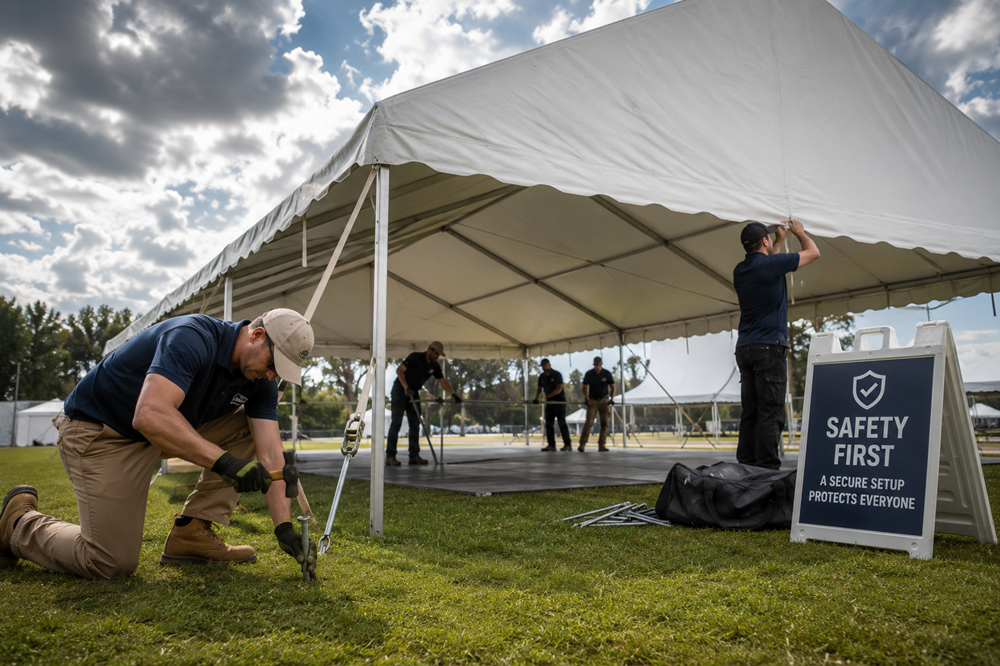
One wrong move while putting up a tent might lead to trouble down the line. When it’s time for trade fairs, local gatherings, games outside, or public displays, stability matters most. A shaky start often means stress later on. Each pole, each anchor, has got to hold firm under real conditions. Safety doesn’t come by accident when the wind picks up or crowds gather nearby.
Most errors become clear only after they happen, yet knowing them early lets organizers sidestep trouble. Teams spot risks faster when past slipups are laid bare. Safer spaces grow not from luck but from learning what went wrong before. Whether using a standard custom tent or a more elaborate structure, proper setup practices protect both people and equipment throughout every event.
Setting Up Tents Wrong and Fixing Common Errors
-
Ignoring Proper Anchoring
Folks often overlook how crucial solid fastening really is during setup. A sudden breeze might push hard against tents, even if it feels gentle at first. When skies look clear, certain groups use only a few stakes or none, assuming danger is low. Yet clouds shift fast, and still air turns wild.
When the ground is soft, stakes often work best to hold a tent in place. Depending on wind forecasts, heavier anchors might be necessary even on solid surfaces. Sandbags add stability when stakes cannot grip properly. Different setups respond better to changing skies if chosen with care. What works on pavement fails in soil, so matching the method to the terrain matters most.
-
Skipping Site Inspection
The installation area plays a major role in tent stability. Bumps underfoot, sneaky inclines, water runoff problems, things hanging above, and even pipes below each one complicate setup. Jumping straight in without checking the spot tends to invite trouble. Looking at the location ahead of time makes it easier to spot risks. Teams can tweak plans before putting things together because they saw what was there. A clear view early on means fewer surprises later.
-
Failing to Check Frame Components
Wear shows up on tent frames after many trips, packing sessions, and repeated setups. Frames grow weaker when handled constantly, jostled in bags, or left stacked without care. A wobble here, a worn latch there, small flaws that slip past quick checks. Only when poles click into place do cracks in connectors or weak joints reveal themselves. Before every event, take a fast look. This helps spot damaged pieces before they create bigger issues. It also lowers the chance of frame problems during use. Fixing things early means less trouble later.
-
Incorrect Fabric Tension
Firmly stretched, the tent material spans the structure without gaps. Fabric that’s too loose might flutter wildly when it’s windy, putting extra pressure on the roof part and the frame holding it up. Too much tightness, meanwhile, loads the material and joints with more force than needed. Because guidelines come from those who made the fabric, sticking to them helps maintain proper tension. A smooth appearance often follows a correct setup. When installation matches recommendations, wear slows down, and the fabric stays in better condition. Proper tension helps prevent sagging while supporting the tent’s overall durability.
-
Overlooking Weather Conditions
Frost biting at dawn changes how tents hold up. Winds shifting through the night test their strength differently. Rain pooling near seams finds weak spots fast. Heat swelling inside makes the fabric restless. Storms arriving without warning push materials past limits.
Later in the afternoon, weather shifts might catch some planners off guard. Tents react differently when the wind picks up, especially if they were secured only for calm conditions. When skies shift, crews closely watch changing plans if winds rise. Storm clouds looming? Structures get braced without delay. If rain swells, pathways are redirected just in time. Safety steps grow stricter once alerts sound. The same weather awareness applies to specialty structures like inflatable replicas; monitoring conditions closely ensures every structure stays safe and stable throughout the event.
Final Thoughts
Before anyone shows up, safety starts taking shape. Getting things ready ahead of time, setting everything up with attention, and checking often make the gathering more secure. What happens behind the scenes shapes how smooth it feels when people walk in. Most issues with gear failure or safety hiccups vanish when crews check anchor points first. Site specifics matter just as much as what the ground tells you before setup begins. Frame parts need close inspection; skipping this step risks weak spots later. Tightness of material gets overlooked until the wind finds a loose edge. Weather shifts catch people off guard unless someone watches the early signs. A bit more planning doesn’t slow things down; it reshapes outcomes once storms roll near.