
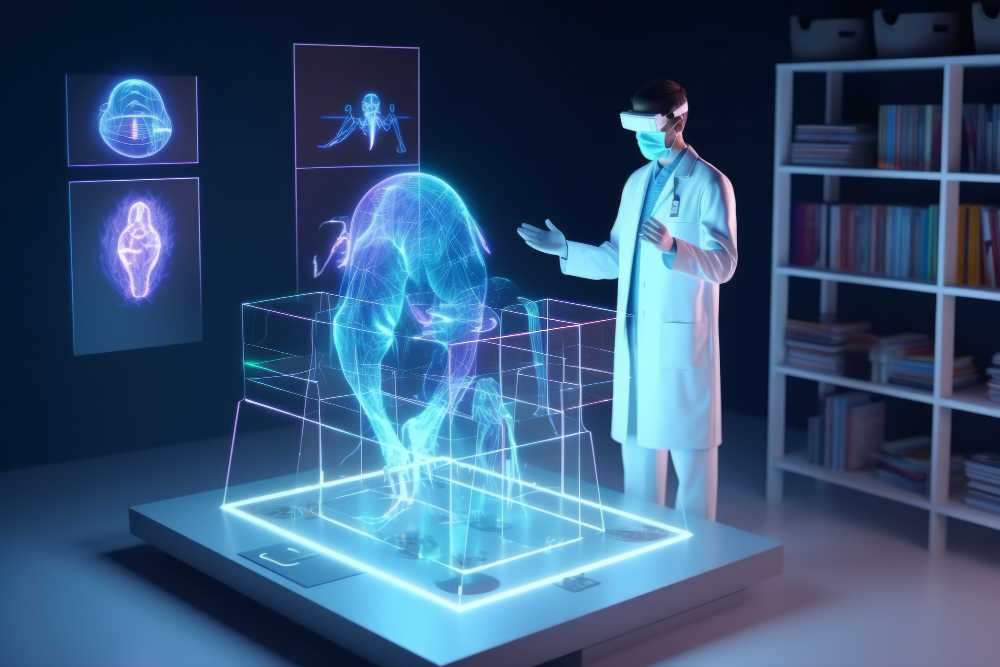
The use of 3D animation is revolutionizing clinical training and patient care, as seen in the visualization of science. 3D animation is transforming clinical training and patient care, as illustrated in the visualization of science.
Visualization has always been a part of medicine. Whether it is a medical textbook from hundreds of years ago that features drawings of various anatomical structures or a modern MRI scan or digital imaging system, healthcare professionals have relied on visual aids to learn about the human body and to explain complex concepts. That evolution has now taken a whole new turn with 3D medical animation, today.
Once in the realm of specialty use, computer-aided design was now integral in clinical education, patient communication, surgical planning and medical research. Medicine is becoming ever more specialized. Doctors, nurses, students and patients need to comprehend biological processes that are sometimes invisible to the naked eye when examining new treatment approaches, advancing medical devices and personalized therapies. These concepts cannot be adequately conveyed through static images and extended explanations. Three-dimensional animation fills this void, bringing scientific knowledge to life in a realistic and interactive way, even to the most complex medical processes.
Making Complex Medical Concepts Easier to Understand
While hospitals, universities, pharmaceutical firms and medical device manufacturers are increasingly adopting digital technologies, 3D animation is becoming a valuable educational and communications tool, transforming the worlds of clinical training and patient care. Providing medical information is incredibly difficult, especially for patients. Explaining medical information is extremely challenging, particularly to patients.
The ability of 3D medical animation to explain the complex in simple terms, yet still maintains scientific accuracy, is one of its biggest assets. There are many complex systems within the human body, a myriad of activities that occur on the microscopic level and numerous biochemical reactions that cannot be conveyed purely verbally. These invisible processes can be made visible by using three-dimensional animation.
You can show moving blood in action, moving nerves, immune action and the mechanisms of action of drugs, all in detail. Rather than envisioning the treatment process, viewers can see it going forward, one step at a time. This provides a much more comprehensive knowledge of disease processes and treatment for health-care providers.
For patients, it helps to clear up any confusion about diagnosis and treatment, making medical consultations more productive and meaningful. The visual representation of dynamic biological processes enhances knowledge retention and the understanding of the relationships between anatomy, physiology, and disease that can be achieved by mere prose.
Improving Surgical Planning and Procedural Preparation
To improve surgical planning and preparation. Today, surgery relies on accuracy more. Inaccuracies, even minor ones, can impact patient outcomes and proper preparation is crucial before complex procedures. Three-dimensional animation plays an important role in helping surgeons to see anatomical structures and procedures before surgery starts.
Computerized tomography (CT) scans or magnetic resonance imaging (MRI) scans can be used to provide detailed images of patients’ bodies, which can be transformed into three-dimensional representations to allow for the visualization of tumors, blood vessels, bones, nerves and surrounding tissues. These virtual visualizations help the surgical staff to analyze the different approaches and understand the possible complications, thus enabling them to choose the most suitable path for the incision before beginning the surgery. Communication between multi-disciplinary teams is also enhanced with animated procedural walkthroughs. Surgeons, anaesthetists, nurses and technicians can discuss the procedure together, so they all know what to expect.
Enhancing Patient Education and Shared Decision-Making
In an increasingly technology-driven field of surgery, visualization tools are increasingly a part of the process of surgical planning and not just an educational resource. Increasing Patient Education and Shared Decision Making is an integral part of the plan. The plan includes enhancing patient education and shared decision-making.
Patients are not always able to comprehend medical jargon during a consultation. A doctor can make a diagnosis and explain it to the patient, but the next day the patient doesn’t know what is going on in his body. Three-dimensional medical animation can help fill in this communication gap by replacing abstract explanations with clear, visual story telling.
Rather than explaining what happens when a coronary artery is blocked, physicians can display the blockage to a patient and illustrate how a stent is used to open the vessel and restore blood flow. Instead of talking about joint degeneration, orthopedic professionals can simply show the patient what a healthy joint looks like and then show him what a joint with arthritis looks like, before explaining how the joint can be replaced to restore function.
Patients who are knowledgeable about their disease often can ask relevant questions, consider alternative treatment and make decisions about their care. Visual explanations also help alleviate fear and uncertainty prior to procedures. Patient understanding of what to expect during treatment or surgery can help patients feel more confident and more likely to follow post-surgical guidelines.
The Integration of Emerging Technologies
With virtual reality, medical students and surgeons can enter a three-dimensional environment and interact with organs, allowing them to try out procedures without any risks. Use of augmented reality: digital anatomical representations added to the physical space, which can be used to enrich the educational process and some clinical use.
Furthermore, AI is now playing a role in speeding up animation production by helping to segment images, model anatomical structures and automate visualization workflows. Medical animations will be faster produced, more personalized, and closer to patient-specific data as AI develops. Cloud-based platforms also improve accessibility by enabling institutions in various parts of the world to access educational material without the need for costly in-person training. Combined, these technologies are designing highly interactive learning environments that are much more than what the classroom experience commonly provides.
Medical Animation Market
As I continued my research into the increasing importance of medical animation in the healthcare arena, I stumbled upon this informative report by Roots Analysis that outlines the immense potential for growth in the medical animation field.
The global medical animation market is expected to grow at an impressive compound annual growth rate (CAGR) of 18.8% during the forecast period, reaching USD 546 million in 2025, and reaching USD 3,050 million by 2035, the report states. The growth of this strong market is being driven by the growing use of medical animation in clinical training, patient education, pharmaceutical communications, and surgical planning. With the increasing trend of digital adoption in healthcare, visual communication tools are playing an increasingly vital role in simplifying complex medical concepts and enhancing understanding among patients and healthcare professionals alike.
Challenges That Still Need Attention
While 3D medical animation presents numerous benefits, it also has significant challenges to overcome. For making scientifically accurate animation, close collaboration between medical experts, illustrators, animators and software specialists is necessary. Creating high-quality visuals can be time consuming and costly especially when dealing with complex anatomy or sophisticated treatments.
Scientific accuracy is also crucial. Minor errors in visuals can lead to misconceptions with learners or patients. Each animation, however, needs to be evaluated thoroughly for content and usage by subject experts before its incorporation into educational and/or clinical activities.
Healthcare institutions also need to make sure that visualizations are aligned with the existing medical guidelines and advancing scientific evidence. With the changing of treatment, educational materials must be updated regularly to keep it relevant. There are other factors, such as accessibility. Cloud technologies and new and affordable software solutions are beginning to help smaller hospitals and educational institutions gain access to advanced visualization technologies, but there are financial or technological challenges that still must be overcome.
Looking Ahead
The teaching and learning of health care in the future is becoming more visual, interactive and individualized. The demand for scientific communication in medicine will continue to increase in all fields of medicine, as medicine becomes more complex.
The use of 3D animation has become more than just pretty additions to conventional pedagogy. It is now a solution that is being used to support innovation, increase professional training, improve clinical understanding, and communicate with patients.
The potential future enhancements include creating completely unique patient animation directly from medical imaging; using AI to create educational material that is tailored to a patient’s learning style; and truly immersive simulations that closely recreate real clinical situations. These advances can increase technical expertise, patient engagement, and sophisticated medical information is more approachable than ever before.
Finally, medicine is about comprehending the human body and conveying that knowledge. 3D animation is making invisible biological processes more visible by rendering a clearer visual narrative that helps clinicians learn more efficiently, and enables patients to make informed decisions, fostering a more science-friendly healthcare environment. With the continued evolution of visualization technologies, their impact on clinical training and patient care will continue to grow and will be even more profound in the future, making seeing a powerful pathway to healing.
References:
- Alhojailan, R. A., Alkhalifah, R., AlBani, B., & Wadi, M. (2025). The usefulness of 3D heart models as a tool of congenital heart disease education: A narrative review. Journal of the Saudi Heart Association
- Debrah, R., Rahman, A., Antwi, S., Kusi-Amponsah, A., Kusi-Amponsah Digi, & Armah, J. (2024). Integrating 3D multimedia into nursing and midwifery education: A case study on paediatric massage instruction. Journal of Medical and Health Studies
- Hsu, M.-H., Yang, H.-W., Liu, C.-M., Chen, C.-J., & Chang, Y.-C. (2022). Clinical relevant haptic simulation learning and training in tooth preparation. Journal of Dental Sciences
- Jacob, J., Stunden, C., & Zakani, S. (2023). Exploring the value of three-dimensional printing and virtualization in paediatric healthcare: A multi-case quality improvement study. Digital Health
- Roots Analysis. (2025, August). Medical animation market.
About the Author
Avantika Sharma is a content writer and healthcare/biotech enthusiast. She is an expert at making complex scientific concepts accessible, engaging and well-researched for a broad audience. She reads fiction avidly and writes non-fiction with passion. Her curiosity, combined with painstaking research, produces informative and accessible articles that bridge the gap between science and everyday understanding.